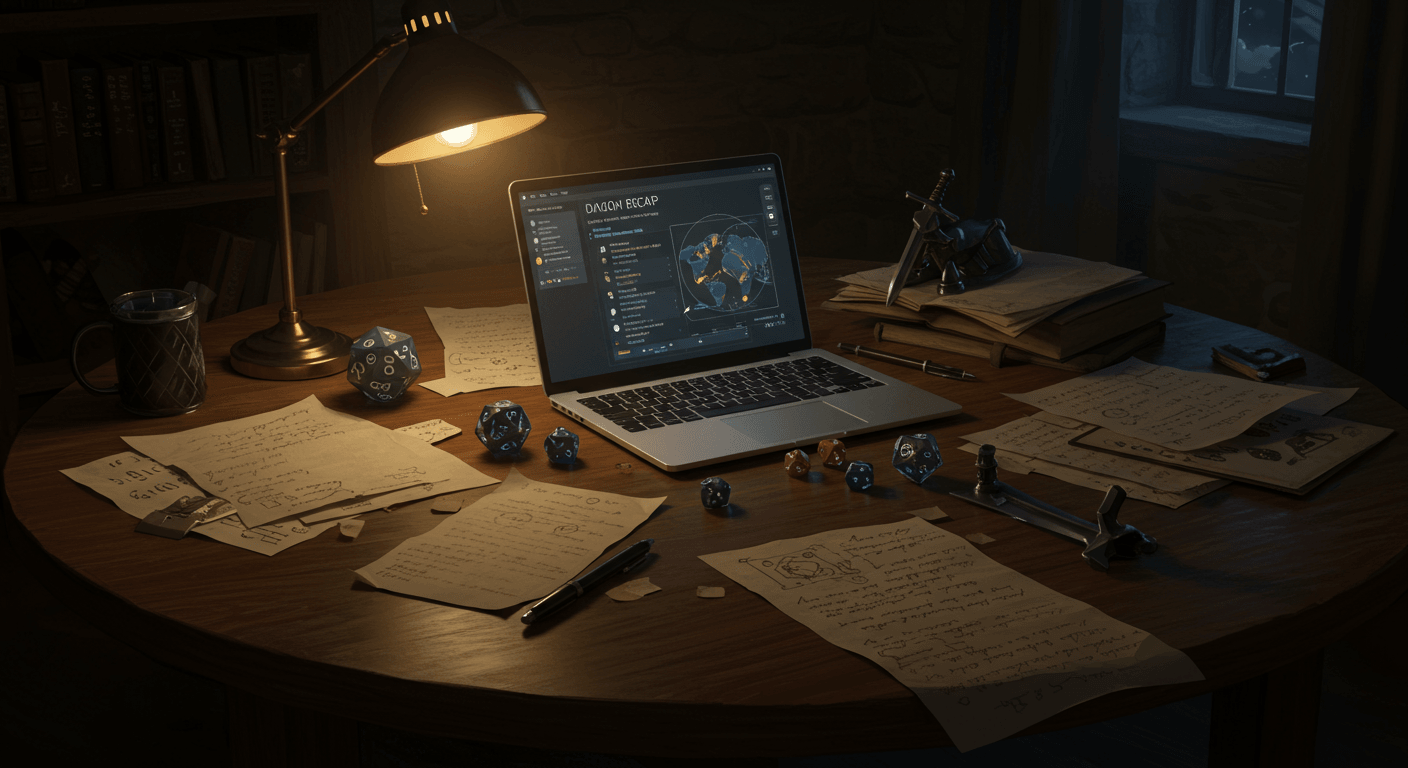
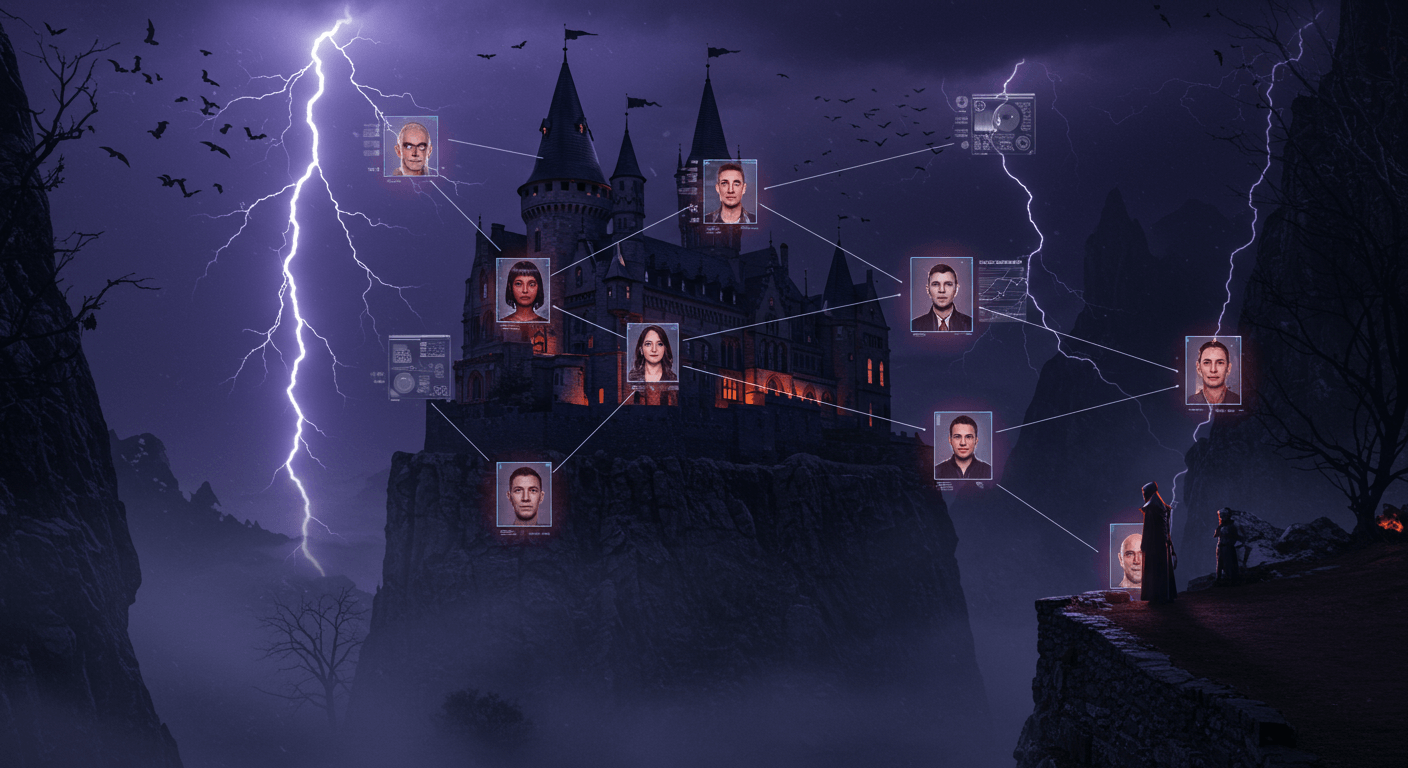

Thirteen sessions into Curse of Strahd, one of my players defected to the villain. The AI saw it coming before I did.
I'm talking about Samael — now calling himself Azrael — who went from party member to Strahd's seneschal in what felt like a single dramatic moment. But looking back at the campaign intelligence reports, the signs were there for sessions. The AI had been flagging his increasingly dark choices, his fascination with power, the way he talked about "necessary sacrifices."
I just thought he was playing his character well.
This is the story of how AI campaign intelligence completely changed how I run Curse of Strahd — and why, after 13 sessions of the most complex D&D module ever published, I can't imagine doing it any other way.
Why Curse of Strahd Breaks DMs
Let's be honest: Curse of Strahd is a nightmare to run properly.
The book gives you Barovia — this sprawling, interconnected gothic horror sandbox with dozens of NPCs, each with their own motivations, relationships, and secrets. There's Ireena's complicated family history, the tension between the Vistani camps, Vallaki's festival of lies, the werewolf pack dynamics, and that's before you even get to Castle Ravenloft itself.
Then there's Strahd. The villain who's supposed to be this omnipresent puppet master, pulling strings and manipulating everyone from the shadows. How are you supposed to roleplay someone who knows everything that's happening in his domain when you can barely keep track of what happened last session?
I've seen it happen over and over. DMs start strong with the Death House, nail the early atmosphere, but then Vallaki hits and suddenly they're juggling twenty NPCs while trying to remember who said what about whom three sessions ago. The campaign becomes a series of disconnected encounters instead of the intricate web of gothic drama it's supposed to be.
That's where most Curse of Strahd campaigns die — not from TPKs, but from DM fatigue.
The Setup: Recording Everything Changes Everything
Here's what changed my game: I started recording every session through Discord.
Not for content creation (though streaming on Twitch every Tuesday as ElStormeo has been incredible). I started recording because I was tired of frantically scribbling notes while trying to run emotional scenes. You know the feeling — Ireena is pouring her heart out about her father's death, Rango is having a breakdown about his past, and you're trying to capture the moment while simultaneously thinking three moves ahead as the DM.
Recording everything freed me to be present in the moment. No more "wait, what did Charles say about that NPC five sessions ago?" Now I can search the transcripts and find every single mention.
But here's where it gets interesting: the AI doesn't just transcribe what happened. It analyzes patterns, tracks character development, monitors relationship dynamics, and flags potential plot threads I might have missed.
The companion page was originally built for my Twitch viewers — a way for them to follow along with session summaries, NPC profiles, and character arcs without spoilers. But it became something more: a living document of our campaign that updates after every session with new insights and connections.
Campaign Intelligence in Action: Real Examples
Let me show you exactly how this works with real examples from our 13 sessions.
The Samael Situation
After Session 5, the AI started flagging Samael's dialogue patterns. He was asking unusual questions about Strahd's power, making comments about "the weak deserving their fate," and showing interest in dark magic that went beyond normal curiosity.
I adjusted how NPCs reacted to him. Ireena became more wary. Father Donavich started watching him carefully during conversations. The Martikovs exchanged glances when he spoke.
By Session 8, when Samael made his choice to serve Strahd, it didn't come out of nowhere. The groundwork was there, built over sessions of small moments that the AI had helped me track and amplify. Now he's Azrael, Strahd's seneschal, and every interaction feels earned because we can trace the arc from beginning to betrayal.
Relationship Mapping That Actually Mattered
The AI caught something I missed entirely: Charles Nightingale and Rango Thornsnare were developing serious tension.
It started small — disagreements about tactics, different approaches to NPCs, subtle eye rolls during each other's big moments. Left alone, this might have simmered into player conflict. Instead, the campaign intelligence reports flagged it as an emerging pattern.
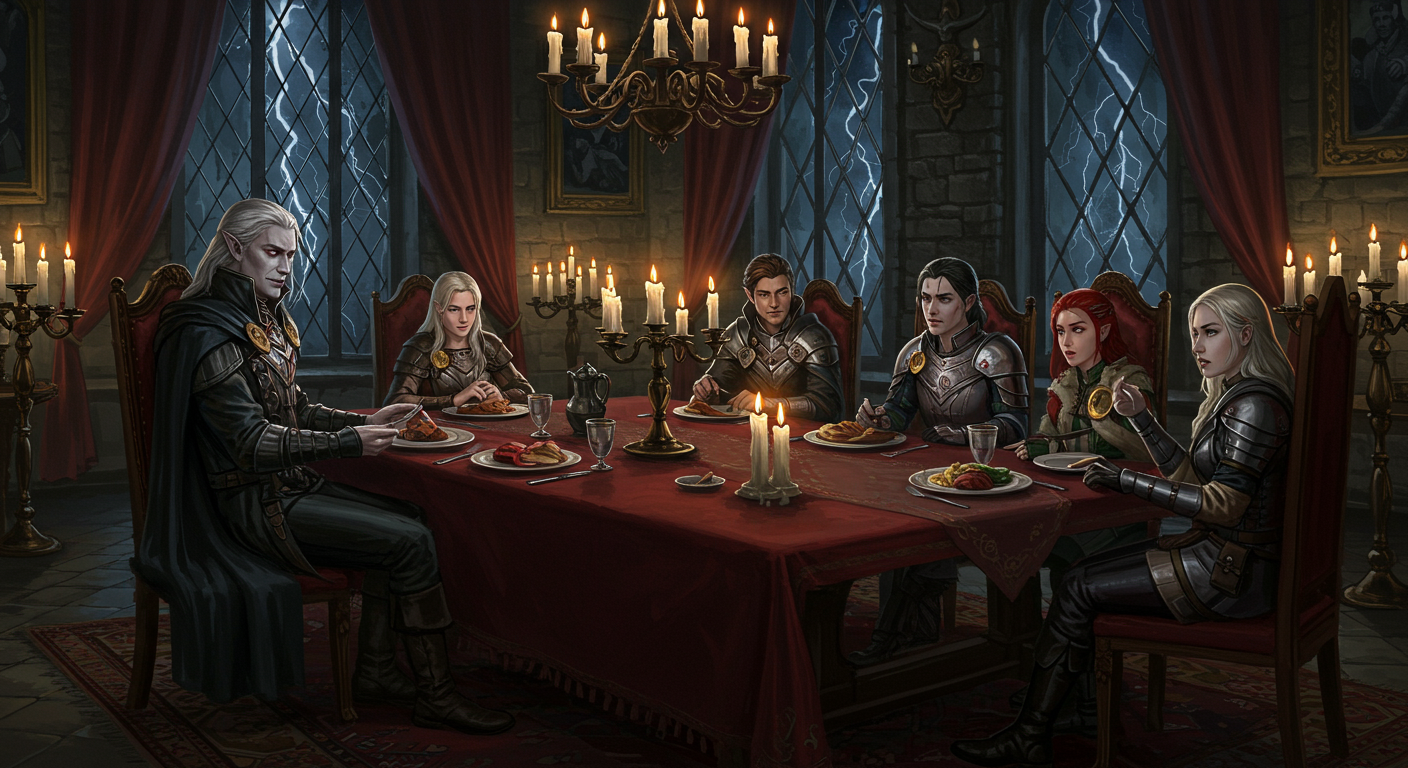
I leaned into it in-character. Had NPCs comment on their different approaches. Created situations that highlighted their conflicting values. By the time they had their actual fight after the dinner at Castle Ravenloft (Sessions 11-12), it felt like the natural culmination of a long-building character arc rather than random player drama.
The Seeds That Grew
Here's the subtle one: players kept asking about specific pieces of lore I'd mentioned in passing. The AI tracked these questions and flagged them as "player interest indicators."
Turns out, Kaelen's player was fascinated by the history of the amber temple. Mareek's player kept bringing up questions about the druids. Vasily (yes, a Martikov playing a Martikov — we leaned into the meta-humor) was digging into family history in ways I hadn't expected.
Instead of generic prep, I could focus on developing these specific threads because I had data on what actually captured their attention.
Session Prep: The Real Game-Changer
This is where campaign intelligence truly shines. Traditional session prep for Curse of Strahd is brutal — you're trying to anticipate which of the hundred possible directions the players might go while keeping track of all the moving pieces.
With full session transcripts and AI analysis, my prep became surgical.
Instead of preparing for everything, I could search "what did Charles say about Ireena" and get every single interaction, with sentiment analysis showing how his feelings evolved over time. I could see which NPCs the party mentioned most often, which locations they seemed eager to explore, which mysteries they were actively investigating.
The AI also suggests which plot threads are ripe for development. After 12 sessions, it knew the party's patterns well enough to flag when someone hadn't had character development in a while, or when a subplot had been dormant too long.
For the dinner scene at Castle Ravenloft — Sessions 11-12, which honestly might be the best thing I've ever run as a DM — I had full intelligence on 12 sessions of player behavior. I knew exactly which buttons Strahd could push, which characters would react how, what fears and desires to exploit.
Strahd's manipulation felt personal because it was built on a foundation of documented player choices, not generic villain monologuing.
The Companion Page: More Than Stream Support
What started as a viewer aid became an essential DM tool. The companion page updates after every session with new information — NPC profiles that evolve based on player interactions, location descriptions that reflect what the party has discovered, character arcs that track actual development.
But here's the unexpected benefit: it forces me to process what happened. Writing those session summaries and updating character profiles makes me think about the session from different angles. What did this reveal about Rango's motivations? How did this scene change the party's relationship with Ireena?
The companion page became my reflection tool, not just my documentation system.
Twitch viewers love it because they can follow along without me having to explain everything during the stream. They can check character relationships, review past events, and understand the current situation without interrupting the flow of play.
What 13 Sessions Taught Me
Running Curse of Strahd with AI campaign intelligence for 13 sessions taught me several things I wish I'd known earlier:
Let the AI Track the Small Stuff
I used to spend mental energy trying to remember every detail. Who said what, when, to whom. What each NPC knows about which topics. Which party member has which item or piece of information.
Now the AI handles that cognitive load. I can focus on the big picture — the emotional beats, the dramatic timing, the horror atmosphere — while trusting that all the small continuity details are tracked and searchable.
Session Recordings Capture What You Miss
During intense moments — character deaths, major revelations, emotional breakthroughs — I'm focused on the immediate drama. I miss the subtle reactions, the quiet character moments happening while the spotlight is elsewhere.
The recordings capture everything. Later, I can see how Vasily reacted when Samael made his dark turn, or catch the moment when Charles realized Ireena was more than just another NPC to protect.
Campaign Intelligence Amplifies DM Instincts
This isn't about replacing human judgment with AI analysis. It's about giving your instincts better data to work with.
When I felt like Samael was heading toward darkness, the AI confirmed it with concrete examples. When I sensed tension between Charles and Rango, the data showed me exactly where it started and how it evolved. When I thought the party was losing interest in a subplot, the conversation analysis proved whether that was true or just my perception.
Preparation Becomes Prediction
Traditional prep is reactive — you prepare for what you think might happen based on where you left off. With 13 sessions of behavioral data, preparation becomes predictive.
I can see patterns in how this party approaches problems, which types of NPCs they connect with, what kinds of mysteries grab their attention. Instead of preparing twenty possible scenarios, I can focus on the three most likely based on actual player behavior.
The dinner scene worked so well because I wasn't guessing what would make good drama — I had data on exactly what would create the most emotional impact for each character.
The Technical Reality
Here's the practical side: this all runs through Discord session recording with AI transcription and analysis. No complex setup, no changing how you already run your game. The system captures everything automatically and generates intelligence reports after each session.
The companion page updates itself based on the session data. NPC profiles evolve, location information expands, character relationships adjust — all based on what actually happened at the table rather than what I think happened.
For a campaign as complex as Curse of Strahd, having this kind of systematic memory and analysis isn't just helpful — it's essential for running the module the way it deserves to be run.
Beyond Strahd: Campaign Intelligence for Any Game
While Curse of Strahd showcases campaign intelligence at its most necessary, the principles work for any long-term D&D campaign. Political intrigue, mystery investigations, relationship-heavy games — any campaign where continuity and character development matter benefits from systematic tracking and analysis.
The key is understanding that campaign intelligence isn't about automation. It's about augmentation. You're still making the creative decisions, building the dramatic moments, responding to player actions in real-time.
But now you're doing it with complete information instead of partial memory. You're building on documented patterns instead of vague impressions. You're creating continuity based on data rather than hope.
The Full Moon Rises
We're 13 sessions in now. The party just hit level 5. Azrael serves his dark master while his former companions deal with the betrayal. The in-game date is Neyavr 6-7, with the full moon rising on Neyavr 8.
And I know exactly where this is all heading because I have 13 sessions of intelligence telling me how this party thinks, what they value, how they approach problems, and what will break their hearts.
That's the real power of campaign intelligence — not just tracking what happened, but understanding what it means for what comes next.
If you're running Curse of Strahd, or any complex long-term campaign, stop trying to hold it all in your head. Document everything. Analyze the patterns. Let the AI handle the memory so you can focus on the magic.
Your players will never know the difference, but they'll feel the impact of every single decision building toward something larger than any of you could have planned.
Whether you're struggling with Curse of Strahd or running any complex D&D campaign, campaign intelligence can help you track the details that make great stories. Start with session recording and see how much better your games can be when you remember everything.
Currently running Curse of Strahd live on Twitch every Tuesday at twitch.tv/ElStormeo. Follow along with our live companion page to see campaign intelligence in action.

Storm Burpee
Founder of StormScape
Storm is the founder and chief architect of StormScape, where a decade of dungeon mastering collides with cutting-edge AI technology. As an active DM running multiple weekly campaigns—including an intricate homebrew world in "The Shattered Crown" and a heavily modified Curse of Strahd—Storm intimately understands the overwhelming prep work that burns out even passionate DMs. This frustration led to building StormScape: the AI-powered campaign management platform that actually understands how D&D works. With a background in conversational AI and automation systems (having built enterprise-grade voice agents and lead generation platforms), Storm brings a unique perspective to the TTRPG tool space. They believe technology should enhance storytelling, not replace it—tools should be invisible during play but invaluable during prep. When not merging code commits or crafting plot twists, Storm can be found obsessing over Magic: The Gathering sealed pools, managing multiple fantasy football teams, or exploring new ways to torment—err, delight—their players.
Found this helpful? Share it with your party!