
The AI Saw What I Couldn't
After Session 7 of my Curse of Strahd campaign, the AI told me one of my players was about to betray the party. I thought it was hallucinating. It wasn't.
The player was Samael — or at least, that was his name back then. The AI had been tracking his behavior across multiple sessions: the secret deals with NPCs, the way he hoarded magical items, how he consistently lied to the party about his actions. I was too busy running combat encounters and managing five other players to notice the pattern.
By Session 8, Samael had become Azrael — Strahd's new seneschal. The AI saw the character's trajectory before I did. Before the player did, honestly.
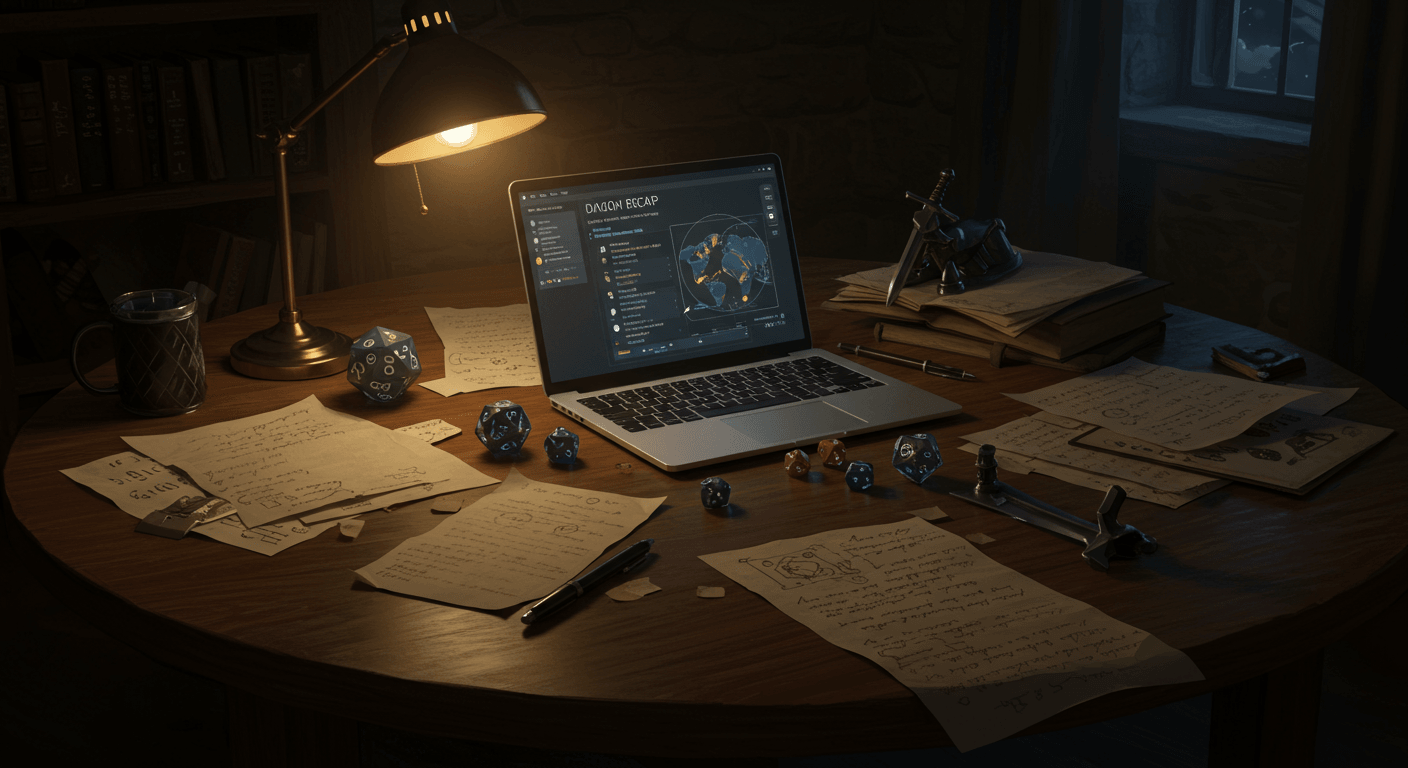
That moment changed everything about how I run D&D campaigns. Not because I handed over creative control to an AI — I didn't. But because I finally had something that could read every word spoken at my table and find the threads I was too busy DMing to notice.
This isn't about replacing human creativity. It's about augmenting it with pattern recognition that no human brain could manage across dozens of hours of gameplay.
What Campaign Intelligence Actually Is
Let me be clear about what we're talking about here. Campaign Intelligence isn't just transcription. It's not fancy note-taking. It's not another chatbot that gives you generic D&D advice.
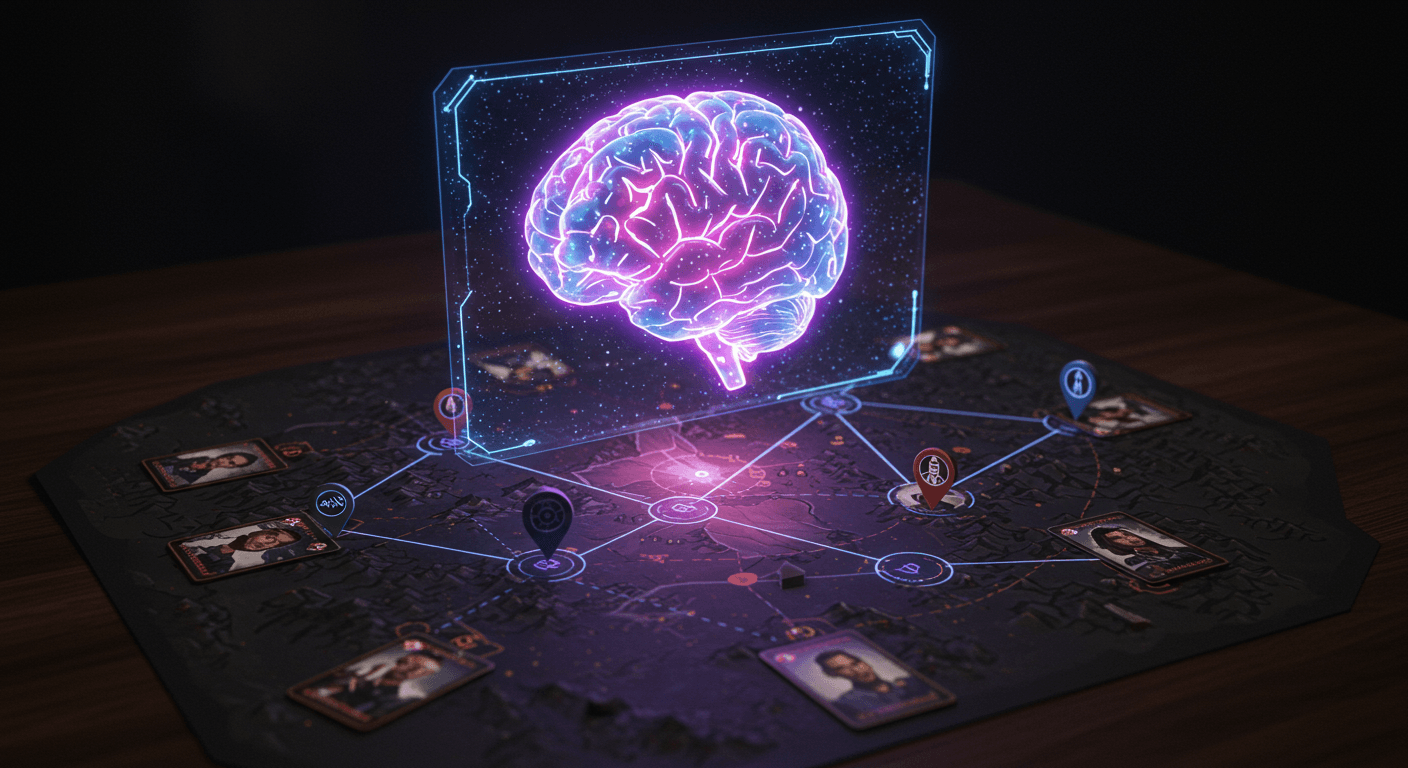
It's pattern recognition software that analyzes every conversation, interaction, and decision made during your sessions. It tracks character development, relationship dynamics, plot engagement, and behavioral patterns across time — things that happen so gradually you don't notice them week to week.
Think about it: in a typical 4-hour session, your table generates somewhere between 15,000-20,000 words of dialogue. Multiply that by 10+ sessions, and you're looking at the equivalent of a novel's worth of character development data. No human can hold all of that in their head while also managing initiative order and remembering which NPC has which accent.
The AI doesn't get tired during hour three of a session. It doesn't forget what happened two months ago. It doesn't miss the subtle shift in how Player A talks to Player B after that argument in Session 5.
The DM Intel Report: Your Post-Session Lifesaver
Here's what actually happens after each of my sessions now. Within minutes of ending the recording, I get a DM Intel Report that would have taken me 2+ hours to compile manually — if I could have compiled it at all.
The report breaks down into several key sections. First, it flags the most important moments from the session. Not just combat encounters or major story beats, but conversational turning points. Things like "Rango openly questioned Charles's leadership for the third time" or "Ireena showed genuine affection toward Ismark — first positive sibling interaction."
Next comes NPC interaction analysis. The AI tracks which NPCs players ask about most, which ones they trust, which ones they avoid. After our Vallaki sessions, it flagged that the party kept bringing up the toy shop, even weeks later. I knew to develop that plot thread.
Player engagement metrics show me who's driving conversations, who's withdrawing, and what topics get everyone animated. In my Shattered Crown campaign, the AI noticed that discussions about the missing prince got everyone talking, while the political intrigue in the capital barely registered. I adjusted accordingly.
Plot thread status gives me a living map of every active storyline, rated by player interest. No more forgotten plot hooks because the AI never forgets. If I planted something three sessions ago and nobody bit, it tells me. If something's gaining momentum, it highlights that too.
The whole thing reads like having a co-DM who was taking perfect notes while I focused on performance and improv. Except this co-DM never misses a detail and sees patterns I'd never catch.
Character Intelligence: Knowing Your Players Better
The individual character reports are where this system really shines. Every player gets a detailed analysis of their character's development, motivations, and relationship dynamics. And here's the thing — half the time, the players learn something about their own characters they hadn't consciously realized.
I showed one of my players their character report after Session 6. This was someone who usually stayed quiet during character discussions, never really articulated their PC's goals or motivations. When they read about their character's evolving relationship with their deity, their growing confidence in social situations, and their subtle protective instincts toward the party's healer, their face lit up.
"I didn't know I was doing that," they said. "But that's exactly who she is."
The AI tracks conversational patterns: who each character talks to most, what topics they gravitate toward, how their speech patterns change in different situations. It noticed that my paladin's player used more casual language when talking to the rogue but formal speech with NPCs — revealing an interesting character dynamic I'd never consciously processed.
For quieter players especially, these reports are revelatory. They show all the subtle ways they're contributing to the story, even when they're not driving conversations. As I wrote about in my character intelligence post, sometimes the most impactful character development happens in the margins.
Relationship Mapping: The Social Web
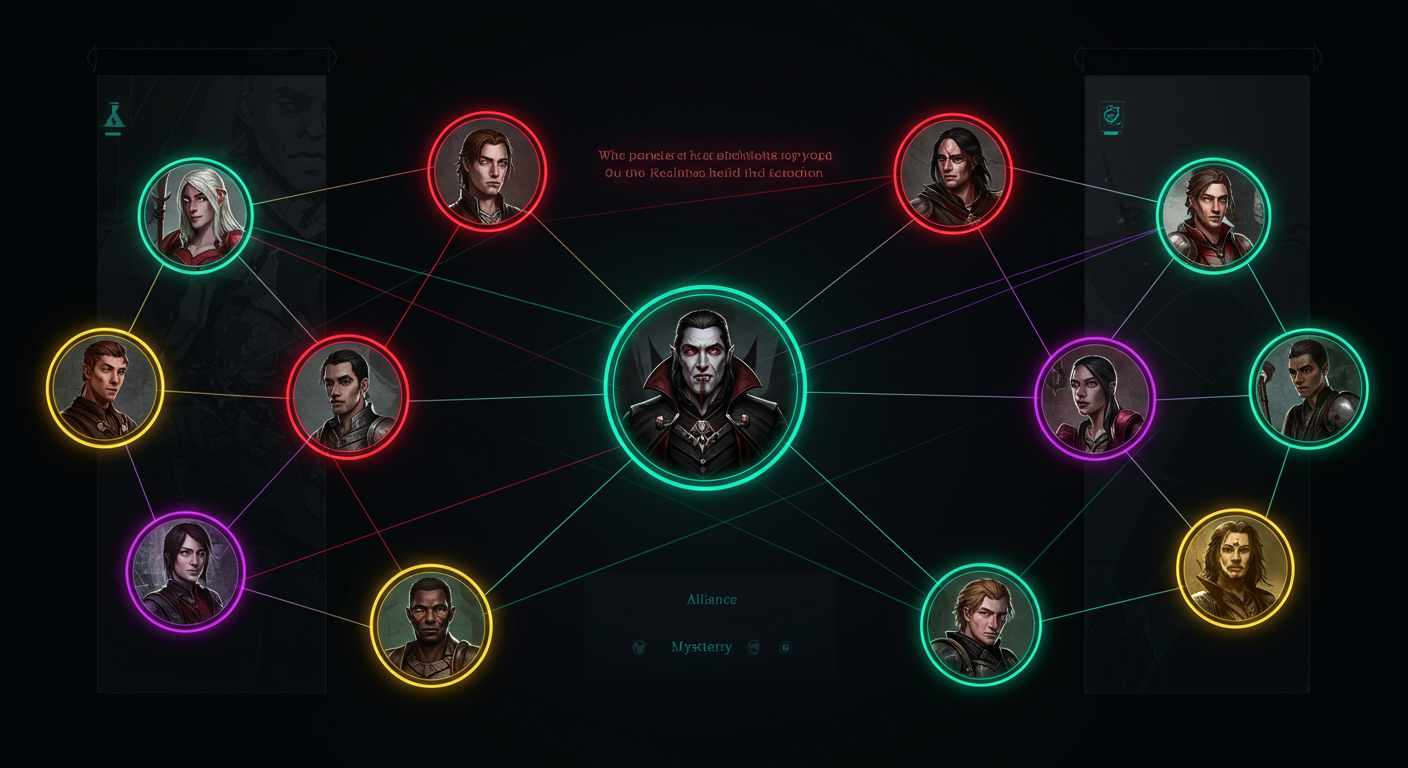
One of the most powerful features is relationship tracking. The AI maintains a dynamic map of how every character — PC and NPC — relates to every other character. It tracks friendship development, growing tensions, romantic subplots, and power dynamics.
Remember Charles and Rango from my Curse of Strahd campaign? The AI caught their growing friction weeks before it exploded during our Dinner with the Devil sessions. It noticed the subtle ways Charles questioned Rango's decisions, how Rango's responses became increasingly defensive, and how other party members started picking sides.
This relationship intelligence transforms session prep. If I know which relationships are strained, I can design encounters that test those bonds. If I know which NPCs players have grown attached to, I can put them in danger for maximum emotional impact.
The system also tracks cross-session relationship development. It might notice that Player A always backs up Player B in arguments, or that Player C consistently defers to Player D in moral decisions. These patterns become the foundation for character-driven storylines.
For romantic relationships especially, the AI provides objective tracking that helps avoid awkwardness at the table. It notices growing chemistry between characters without the DM having to make judgment calls about player intentions. This was crucial in my Shattered Crown campaign, where a slow-burn romance developed organically over multiple sessions.
Plot Thread Tracking: Never Lose Another Hook
Here's a DM pain point we all know: you plant a perfect plot hook in Session 3, players don't bite immediately, and by Session 8 you've completely forgotten about it. Meanwhile, players bring up some throwaway NPC you invented on the spot, and you scramble to remember who they were.
Campaign Intelligence solves this by maintaining a living map of every active plot thread. It rates player engagement with each thread based on how often they discuss it, how many questions they ask, and how their behavior changes in response to new information.
In my Curse of Strahd campaign, I planted hints about a secret resistance movement in Vallaki. Players seemed lukewarm initially, so I focused on other storylines. But the AI kept tracking mentions — and after four sessions, it flagged that players were circling back to resistance conversations consistently. They were more interested than I'd realized.
The system also suggests which threads are ripe for development. If players keep asking about an NPC, it recommends bringing that character back. If they've ignored a major plot point for multiple sessions, it suggests either advancing it without them or letting it fade.
This prevents both forgotten opportunities and forced storylines. You develop what players care about and let uninteresting threads naturally die.
The Prep Revolution: Data-Driven DMing
Having all this intelligence fundamentally changes how I prepare for sessions. Instead of generic prep work, I get targeted suggestions based on my specific table's interests and dynamics.
Before Campaign Intelligence, my prep process was basically: review last session's notes, advance whatever plot threads I remembered, prepare some encounters that seemed thematically appropriate. Generic advice from r/DMAcademy helped, but it couldn't account for my specific players' interests.
Now I prep with surgical precision. The AI tells me which NPCs to bring back, which relationships need attention, which plot threads are gaining momentum. When I planned the Dinner with the Devil sequence for my Strahd campaign, I had intelligence on 12 previous sessions worth of character development and relationship dynamics.
The result? That dinner scene felt personally crafted for each player because it was. I knew exactly which characters would clash, which revelations would hit hardest, and which NPCs each player trusted or feared. The AI had given me a psychological profile of my entire table.
Session prep time dropped from 3-4 hours to about 90 minutes. Not because I'm doing less prep, but because I'm doing smarter prep. I'm not planning content that my players won't engage with.
What It Won't Do (And Why That's Important)
Let me be brutally honest about limitations because overpromising helps nobody. Campaign Intelligence won't replace your creativity as a DM. It can't read the room in real-time and tell you when to pivot mid-scene. It sometimes flags things that aren't actually important — the AI doesn't understand context the way humans do.
The system needs several sessions of data before insights become reliable. If you're expecting actionable intelligence after Session 1, you'll be disappointed. Pattern recognition requires patterns, and patterns take time to emerge.
It also can't account for player knowledge or feelings that aren't expressed at the table. If a player is frustrated with their character but never voices it during sessions, the AI won't catch that. It only knows what it can analyze from recorded gameplay.
Sometimes the AI's suggestions conflict with your creative vision for the campaign. When that happens, trust your instincts. The data informs your decisions; it doesn't make them for you.
I've also found that some mysteries work better when you don't know how players are reacting. Part of DMing is reading the room and making judgment calls based on incomplete information. Over-analyzing every interaction can sometimes reduce the organic feel of gameplay.
From Burnout to Breakthrough
Three years into my previous campaign, I was burning out hard. The prep was taking over my weekends, I was forgetting important details between sessions, and I felt like I was disappointing my players even though they never complained.
That experience led me to build StormScape, and Campaign Intelligence specifically. I needed tools that could help me be a better DM without requiring more hours of manual work. As I wrote about in my burnout post, having AI assistance gave me back the joy of DMing.
The best part isn't just the time savings — though those are real. It's the confidence. Walking into a session knowing you understand your table's dynamics, knowing which storylines they're invested in, knowing how each character is developing — that confidence shows in your DMing.
Your NPCs feel more real because you know exactly how players relate to them. Your plot threads feel more engaging because you're developing the ones that already have player investment. Your character moments land harder because you understand the relationship dynamics at play.
Recording Makes Everything Possible
None of this works without session recordings, obviously. I know some tables are hesitant about recording their games, and I get it. But if you want this level of campaign insight, recording is non-negotiable.
I wrote extensively about the session recording setup that works for my table. The key is making it invisible — players forget about the recording after the first few sessions if you handle it right.
For my Curse of Strahd campaign, we stream on Twitch anyway, so recording was already part of our process. But even for private tables, the benefits outweigh the initial awkwardness.
The AI needs that raw session data to work. No recording means no transcripts, which means no pattern recognition, which means no campaign intelligence. It's that simple.
Try It Yourself
I've been using Campaign Intelligence for over a year now across two active campaigns. The Samael-to-Azrael revelation was just the beginning. The system has flagged romantic subplots, warned me about player disengagement, suggested NPC callbacks that led to amazing character moments, and helped me understand my own table better than I ever thought possible.
If you're curious about what your campaign looks like from an AI perspective, start with session recording. Get a few sessions of data, then see what patterns emerge. You might be surprised by what you learn about your own table.
Check out the companion page for my current Curse of Strahd campaign to see how Campaign Intelligence works with a real, ongoing campaign. Thirteen sessions of data and counting.
The AI DM assistant that knows your campaign better than you do isn't science fiction. It's running my table every Tuesday night. And after seeing what it caught about Samael's dark turn, I'm never running a campaign without it again.

Storm Burpee
Founder of StormScape
Storm is the founder and chief architect of StormScape, where a decade of dungeon mastering collides with cutting-edge AI technology. As an active DM running multiple weekly campaigns—including an intricate homebrew world in "The Shattered Crown" and a heavily modified Curse of Strahd—Storm intimately understands the overwhelming prep work that burns out even passionate DMs. This frustration led to building StormScape: the AI-powered campaign management platform that actually understands how D&D works. With a background in conversational AI and automation systems (having built enterprise-grade voice agents and lead generation platforms), Storm brings a unique perspective to the TTRPG tool space. They believe technology should enhance storytelling, not replace it—tools should be invisible during play but invaluable during prep. When not merging code commits or crafting plot twists, Storm can be found obsessing over Magic: The Gathering sealed pools, managing multiple fantasy football teams, or exploring new ways to torment—err, delight—their players.
Found this helpful? Share it with your party!